Voyager 1 expected to reach one light-day from Earth on November 18
NASA's most distant spacecraft nears a new distance mark after a power-saving upgrade and a 48-hour communication gap whose cause is still unknown.
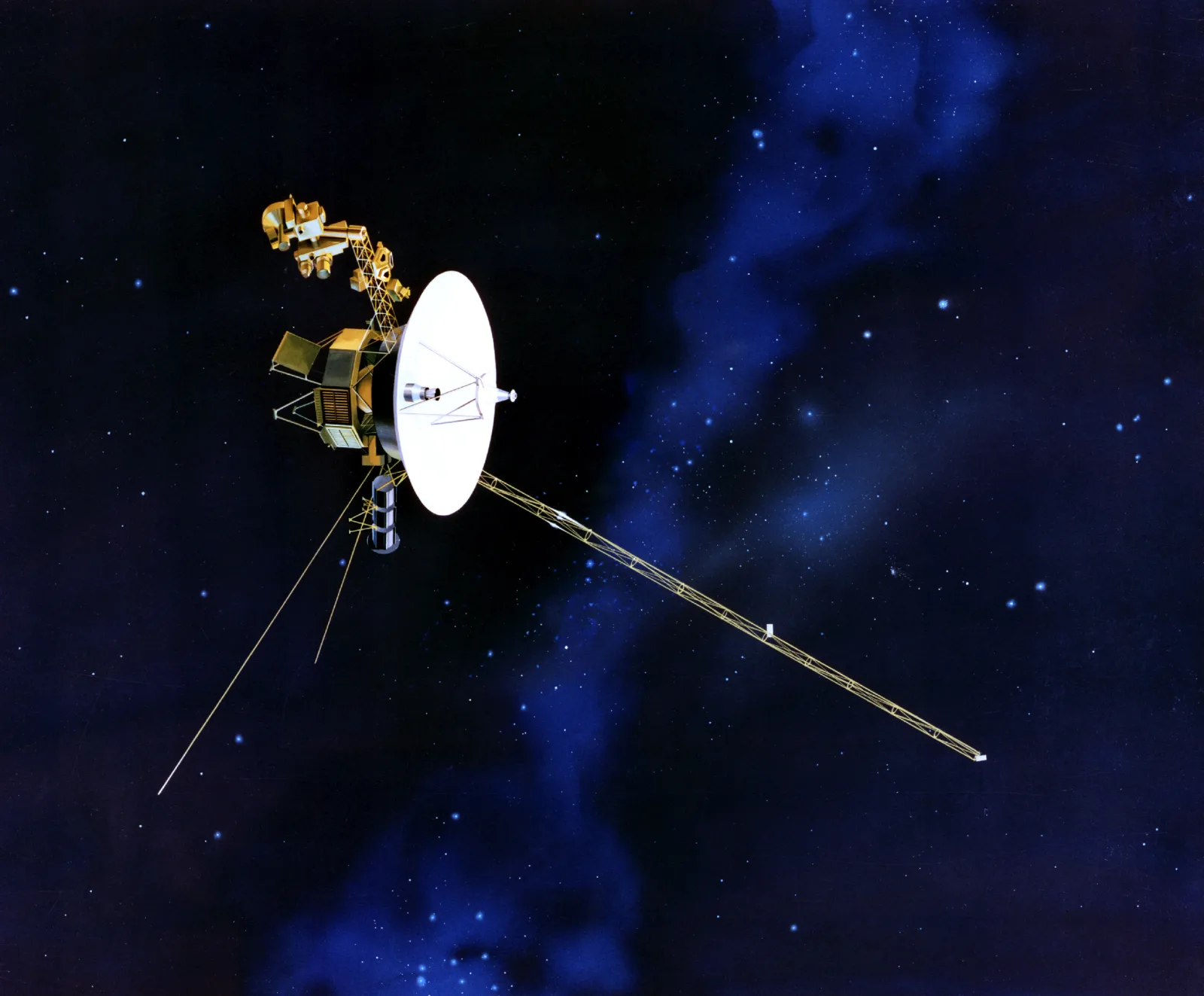
NASA's Voyager 1 is expected to reach a distance of one light-day from Earth on November 18, according to ScienceDaily, which published material provided by NASA's Jet Propulsion Laboratory (JPL). This story rests on that single report.
At that point the spacecraft will be 16.09 billion miles (25.89 billion kilometers) from Earth, so light will take a full 24 hours to travel between the two. The report says no other human-made object has ever reached that distance. Voyager 1 is traveling through interstellar space at about 38,000 mph (61,155 kph).
The milestone shows how hard it is to talk to the probe. Radio signals travel at the speed of light, so a command takes a day to arrive and a reply takes another day to come back.
“"If you want to say 'hello' to Voyager, you send your message and then you go home and you wait two days before you finally get a response."”Suzanne Dodd, Voyager project manager at JPL
According to ScienceDaily, crossing the threshold will not cause any physical change to the spacecraft or its surroundings.
The milestone comes as engineers work to keep the nearly 50-year-old probe running on fading power. Voyager 1 runs on radioisotope thermoelectric generators, which make electricity from the heat of decaying plutonium. Each Voyager probe loses about 4 watts of capacity a year, the report said. Two of Voyager 1's science instruments have already been switched off in recent years because of power limits.
In early September, the team replaced three devices that help keep the spacecraft warm with alternatives that use less electricity. The operation, nicknamed the "Big Bang," took months to prepare and required all three swaps to happen at the same time to keep heat properly distributed. Without it, NASA could have had to shut down another Voyager 1 instrument as early as summer 2027, according to the report. That matters because Voyager 1 and Voyager 2 are the only spacecraft to have directly studied the environment outside the Sun's heliosphere, and no other mission can currently take measurements there.
Voyager 1 also gave controllers a scare in October. NASA's Deep Space Network failed to pick up its signal during scheduled attempts on October 18 and 19. The signal returned on October 20, about 48 hours after the gap began, and contact has held since.
What caused the interruption is not yet known. Engineers found that one set of thrusters had stopped working and that the spacecraft had switched to its backup thrusters on its own, part of a built-in safety system called fault protection.
"This is the first time we've seen the spacecraft do something like this, but we are also at a point in the mission where we have to expect the unexpected," said Kareem Badaruddin, Voyager mission manager at JPL. The report did not say how long the investigation is expected to take.